Introduction
Getting approved by Google AdSense feels exciting, but also a little confusing for beginners. You build a website, add some content, apply for AdSense, and then… rejection. Sounds familiar? You are not alone. Thousands of bloggers face this every single day.
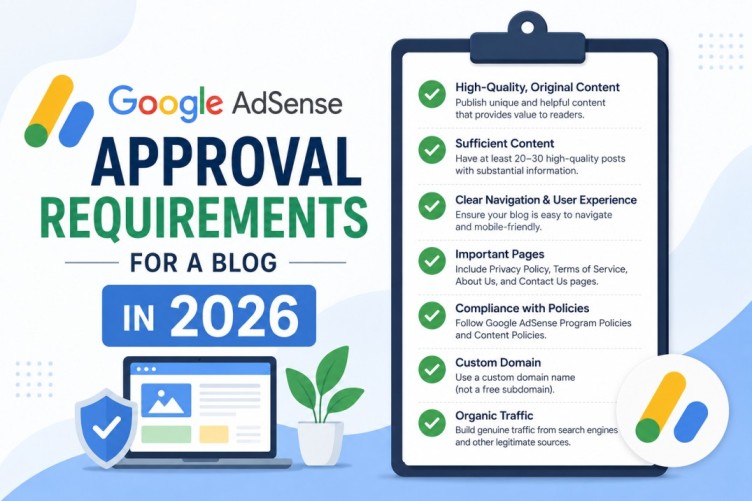
The good news is that AdSense approval is not magic. Google follows a clear set of rules, and once you understand them, getting approved becomes much easier. In this article, we will break down everything you need to know about AdSense approval requirements in simple, easy-to-understand language. No technical jargon, no confusing terms just practical guidance you can apply today.
If you run a blog, a niche website, or a small online business page, this guide will help you understand exactly what Google looks for before approving your site. Let’s get started.
Your Website Must Have Original Content
Content is the heart of any website, and Google takes this very seriously. AdSense will not approve a site that has copied, spun or duplicate content. Every article on your site should be written by you, in your own words, offering real value to readers. Google’s algorithm is smart enough to detect copied content, even if you change a few words here and there. This is called “spun content” and it almost always leads to rejection.
Here are a few tips to keep your content original and approval-ready:
- Write articles based on your own research and understanding
- Avoid copying paragraphs from other websites, even partially
- Use plagiarism checking tools before publishing
- Add your own examples, opinions, and insights
- Keep your tone natural, not robotic or AI-generated sounding
For example, if you are writing about “healthy breakfast ideas,” don’t just rewrite a popular blog post. Instead, share your own breakfast tips, personal experience, or unique recipes. This makes your content stand out and shows Google that your site offers real value, not just recycled information.
You Need Enough High-Quality Content
Many beginners apply for AdSense with just 3 or 4 articles. This is one of the biggest reasons for rejection. Google wants to see that your website is established and has enough content to be useful to visitors. There is no official “magic number” given by Google, but most successful applicants have at least 20 to 30 well-written articles before applying. Quality always matters more than quantity, but having a good volume of content shows commitment and authority in your niche.
A few things to keep in mind:
- Each article should be at least 800 to 1000 words for better depth
- Avoid thin content pages with just a few lines of text
- Cover your topic from different angles across multiple posts
- Organize content into clear categories for easy navigation
Think of it this way: would you trust a brand-new shop with only three items on the shelf? Probably not. The same logic applies to your website. Google wants to see a website that looks complete, organized, and genuinely helpful, not something built overnight just to make quick money.
Your Site Must Have Easy Navigation
Google reviewers, along with automated systems, check how easy your website is to use. A confusing or messy website layout can hurt your chances of approval, even if your content is good. Good navigation means visitors can move around your site without getting lost. This includes a clear menu, organized categories, and a simple structure that makes sense.
Here are some easy ways to improve your website’s navigation:
- Add a clear menu bar with main categories
- Include a search bar so users can find content quickly
- Use a clean, simple theme without too many distracting elements
- Make sure your homepage links properly to other important pages
- Add a sitemap page for better navigation and SEO
For example, if you run a travel blog, your menu should clearly show categories like “Destinations,” “Travel Tips,” “Budget Travel,” and so on. This helps both users and Google understand what your site is about and how content is organized, which builds trust and improves your approval chances.
Add Essential Pages Like About, Contact and Privacy Policy
This is one of the most overlooked AdSense requirements. Many website owners focus only on blog posts and forget about important legal and informational pages. Google requires these pages because they show your site is trustworthy and transparent.
The essential pages every website needs include:
- About Us page: explains who you are and what your website offers
- Contact Us page: gives visitors a way to reach you, usually through email or a contact form
- Privacy Policy page: explains how you collect and use visitor data, which is mandatory for AdSense
- Disclaimer page: (optional but helpful) clarifies the purpose of your content
Your Privacy Policy page is especially important because AdSense uses cookies and collects user data for ad personalization. Without this page clearly stating how data is handled, your application will likely be rejected. A simple tip: you can use free online privacy policy generators to create a basic policy, then customize it to match your website’s specific needs. Just make sure it actually reflects how your site works, rather than copying someone else’s policy word for word.
Your Website Should Have Good Design and User Experience
User experience, often called UX, plays a bigger role in AdSense approval than most people realize. Google wants to show ads on websites that people actually enjoy visiting, not ones that feel cluttered, slow, or hard to read. A well-designed website keeps visitors engaged longer, which is exactly what Google and advertisers want to see.
Here is what good design looks like for AdSense approval:
- A mobile-friendly, responsive layout that works on phones and tablets
- Fast loading speed, ideally under 3 seconds
- Readable fonts with proper spacing between lines and paragraphs
- A clean color scheme that doesn’t strain the eyes
- No broken links, missing images, or error pages
For example, imagine visiting a blog where text overlaps images, the font is too small to read, and pages take forever to load. You would probably leave within seconds. Google’s reviewers think the same way. A simple, clean, and fast website tells Google that you care about your visitors, which directly improves your chances of getting approved.
Follow Google’s AdSense Program Policies
This might be the most important requirement of all. Even if your content and design are excellent, breaking Google’s program policies will lead to instant rejection or even a ban from applying again. Google has strict rules about what type of content is allowed on AdSense-approved websites.
Content and practices that violate AdSense policies include:
- Adult or sexually explicit content
- Violent or dangerous content
- Content promoting illegal activities
- Copyrighted material used without permission
- Misleading or deceptive content, including fake news
- Excessive or misleading ads already placed on the site
It’s also important to avoid asking people to click on ads, even indirectly. Phrases like “click here to support us” or “please click our ads” are strictly against policy and can get your account banned permanently, not just rejected. Before applying, take time to actually read through Google’s AdSense Program Policies page. It only takes about 10 to 15 minutes, but it can save you from making mistakes that cost you weeks of waiting and reapplying. Staying within these rules from day one builds a safer, more sustainable website in the long run.
Your Website Should Have Decent Traffic
While Google doesn’t officially state a minimum traffic requirement, having some organic visitors definitely helps your approval chances. A website with zero traffic looks abandoned or untested, which doesn’t inspire confidence during review. This doesn’t mean you need thousands of daily visitors. Even a steady, small amount of organic traffic shows Google that real people are finding and reading your content.
Ways to build traffic before applying for AdSense:
- Focus on basic SEO practices like using keywords naturally
- Share your articles on social media platforms
- Write content around topics people are actively searching for
- Be patient and consistent, posting regularly over a few weeks or months
For example, a website that gets 50 to 100 visitors a day, coming from actual Google searches, looks far healthier to a reviewer than a site getting zero traffic with the same number of articles. Traffic shows your content has real value to real people, not just words sitting on a page waiting to be noticed.
Choose the Right Domain and Hosting
Your choice of domain and hosting also matters more than many beginners expect. While AdSense does work with free subdomains in some cases, having a custom domain almost always increases your chances of approval and looks more professional. A custom domain, like yourwebsite.com, shows that you are serious about your website and committed to building something long term.
Things to keep in mind when it comes to domain and hosting:
- Choose a domain name that’s relevant to your niche
- Avoid domains that look spammy or contain random numbers and characters
- Use reliable hosting that keeps your site fast and online consistently
- Make sure your website has an SSL certificate, shown as “https” in the URL
For example, a domain like “healthylivingtips.com” looks far more trustworthy than something like “site12345.blogspot.com.” Reliable hosting also reduces downtime, which matters because Google needs to access and review your live website during the approval process. A professional setup, even a simple one, tells Google you are building something real, not just testing the waters.
Frequently Asked Questions
1. How long does AdSense approval usually take?
AdSense approval typically takes anywhere from a few days to about two to three weeks. Google reviews each application manually, so the exact time can vary depending on your website’s quality and current review volume.
2. Can I get AdSense approval with a free website like Blogger?
Yes, AdSense does accept free Blogger subdomains, but approval is generally easier and more reliable with a self-hosted website using a custom domain. A custom domain looks more professional and trustworthy.
3. How many articles do I need before applying for AdSense?
There’s no exact official number, but most successful applicants have at least 20 to 30 well-written, original articles. Quality and usefulness matter more than just hitting a specific count.
4. Why does AdSense keep rejecting my website?
Common reasons include thin or duplicate content, missing privacy policy pages, poor navigation, low traffic, or violations of Google’s program policies. Carefully review each requirement and fix issues before reapplying.
5. Can I apply for AdSense again after rejection?
Yes, you can reapply after making improvements. Google usually explains the reason for rejection in their email, so use that feedback to fix the specific issues before submitting your application again.
Conclusion
Getting approved by AdSense doesn’t have to feel like a mystery. As we covered in this guide, it comes down to having original, valuable content, a well-designed and easy-to-navigate website, essential pages like Privacy Policy and Contact Us, decent traffic and full compliance with Google’s program policies.
Remember, approval is not about tricking Google’s system. It’s about building a genuine, helpful website that real people enjoy visiting. When you focus on quality and your audience first, AdSense approval naturally follows as a result.
Take your time, apply these eight requirements step by step, and don’t rush the process. If you’ve been struggling with rejections, go back through this checklist and fix one issue at a time. Your approval could be just a few improvements away. Good luck and happy blogging!